PDX Shuttle During Rain, Snow & Bad Weather
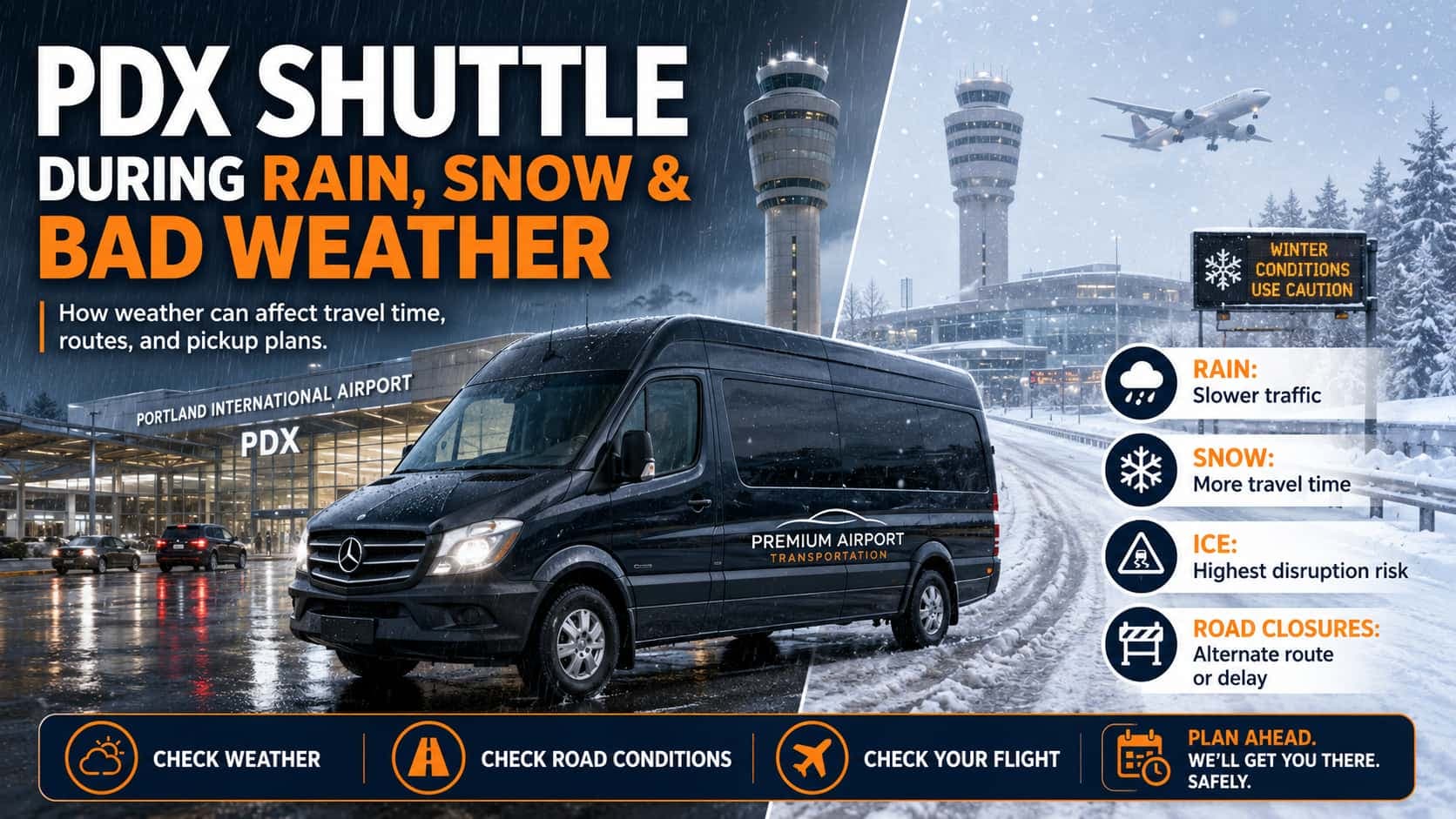
Rain usually does not stop airport transportation in Portland, but snow, freezing rain, ice, strong wind, flooding, and road closures can change a PDX shuttle trip quickly. The main effect is usually extra travel time. In severe conditions, a route may require chains, a detour, a different pickup time, or a delay until the road is safe.
Quick Answer
PDX shuttles can operate in rain and many winter conditions, but the pickup time and route may need to change. Check the weather forecast, TripCheck road conditions, and your airline before leaving. For snow or ice, build more time into the trip and stay in contact with the shuttle company.
Does Rain Usually Stop PDX Shuttle Service?
Usually no. Rain is a normal part of Portland travel, and airport transportation generally continues. The more important questions are how heavy the rain is, whether visibility is poor, and whether crashes or standing water are slowing the main route. Wet conditions can still increase travel time, so use a realistic buffer instead of the fastest normal-weather drive.
If you are still calculating your departure time, see How Long Does It Take to Get to PDX?.
Why Are Snow and Ice Different?
Snow can slow Portland traffic, but freezing rain and ice can create a more difficult problem because traction drops quickly. ODOT warns that plowing, sanding, and deicing do not make a road completely safe and advises travelers to drive for the conditions and consider delaying travel when necessary.
Oregon also uses snow zones and chain requirements. TripCheck says winter snow zones can require drivers to carry chains or traction devices, and in very bad conditions all vehicles may be required to use chains.
Which PDX Routes Need the Most Weather Planning?
Metro trips can be disrupted by ice and crashes, but long regional routes create more weather exposure. Atlas currently notes that Bend to PDX travel over the Mount Hood corridor can be affected by snow, ice, chain controls, and chain-up delays from roughly November through April. Its Bend page says TripCheck mountain-pass conditions are checked before departures. Coast, Gorge, mountain, and Southwest Washington routes can also face wind, flooding, fog, or closures, even when weather at PDX looks mild.
Should You Leave Earlier During Bad Weather?
Yes, but the amount of extra time should match the conditions. Light rain may only justify a small buffer. Snow, freezing rain, or a route with chain restrictions may need substantially more time.
Do not use one fixed winter buffer. Check the actual route first. TripCheck provides road conditions, closures, cameras, snow zones, and chain restrictions. Then work backward from the time you need to be inside the terminal. Our guide on How Early Should You Arrive at PDX? explains that part of the plan.
Can Bad Weather Affect the Flight Too?
Yes. Ground transportation can be moving while the airline is delaying or cancelling flights, and the reverse can also happen. PDX has winter operations for snow and ice, but severe weather can still disrupt aircraft schedules.
Check your airline before leaving home. If an arriving flight is delayed, Atlas says it tracks flight schedules and adjusts reserved airport pickup timing when the same flight arrives late or early.
For that situation, read What Happens If Your Flight Is Delayed?.
What About MAX, Uber, and Lyft in Snow or Ice?
Bad weather affects every transportation option, not just shuttles. TriMet says MAX typically runs well in snow, but cars blocking tracks can cause delays, while ice and freezing rain can build on overhead wires and create larger problems. Rideshare availability can become less predictable during a major storm because fewer drivers may be willing or able to work.
If you are comparing options, see PDX Shuttle vs MAX Red Line and PDX Airport Shuttle vs Uber & Lyft.
How Does Atlas Handle Weather-Affected Trips?
Atlas Shuttle of Portland operates private PDX transportation 24/7 and says it monitors traffic and flight schedules. Several current regional service pages also state that pickup timing can be adjusted around road and weather conditions.
There is one policy travelers should know before booking: Atlas Terms & Conditions currently say extra charges may apply for a weather delay or exceptional additional driving time. The exact charge depends on the circumstances. Review the current terms when winter conditions are expected.
What Should You Do Before a Bad-Weather PDX Trip?
· Check the National Weather Service Portland forecast and warnings.
· Check TripCheck for your full route, not only the road near PDX.
· Confirm your airline is still operating the flight.
· Keep your phone available for driver or dispatch updates.
· Allow more time when snow, ice, flooding, or wind affects the route.
· Do not pressure a driver to use a closed or unsafe road simply to protect the original ETA.
Frequently Asked Questions
Do PDX airport shuttles run in the rain?
Usually yes. Normal Portland rain rarely stops airport transportation, although heavy rain, crashes, or standing water can increase travel time.
Can a PDX shuttle operate in snow?
Often yes, depending on the road conditions, vehicle requirements, and route. Snow or chain restrictions may require more travel time.
What weather causes the biggest Portland travel problems?
Freezing rain and ice can be especially disruptive because they reduce road traction and can also affect MAX overhead wires.
Should I book an earlier pickup during a winter storm?
Usually yes, but base the extra time on the current road and weather conditions rather than using one fixed winter buffer.
What if the road to PDX closes?
A driver may need a safe alternate route. If no safe route is available, the trip may need to be delayed until conditions improve.
Can Atlas charge more for a weather delay?
Atlas current Terms & Conditions state that extra charges may apply for weather delays or exceptional additional driving time, depending on the circumstances.
Final Take
Rain usually means a little more caution and possibly more travel time. Snow can require slower driving and traction equipment. Freezing rain, ice, flooding, or road closures can change the trip much more significantly.
A private shuttle means you do not have to drive yourself, but it cannot override weather, chain laws, closures, or safety. Check the route, add a realistic buffer, and stay flexible.
If private transportation fits your trip, review Atlas Shuttle rates and reserve your PDX ride with your flight, pickup location, passenger count, and luggage details.